Posted by: kdeversblog | May 19, 2014

Huglekultur and flower beds

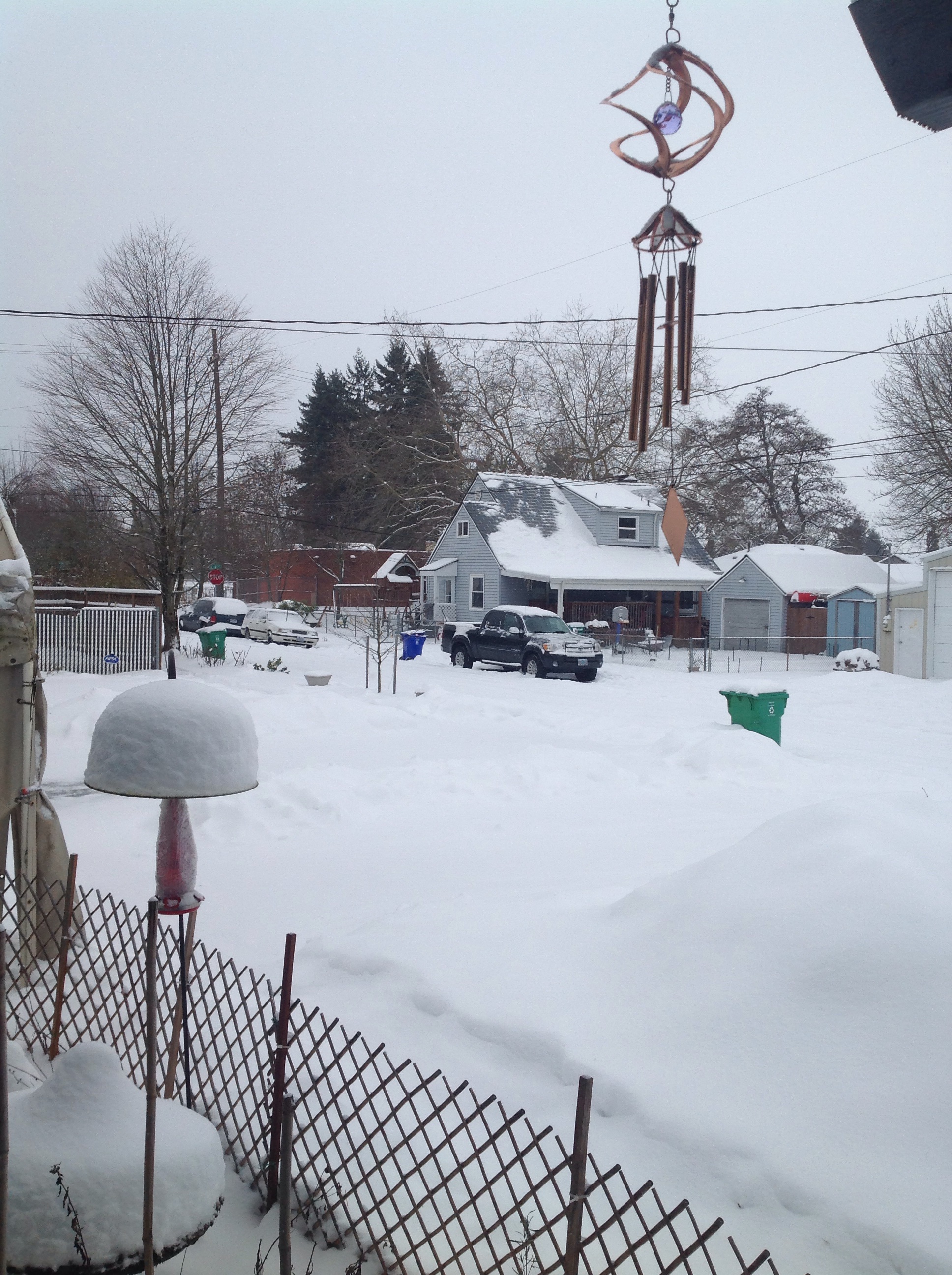
Lots of snow, an unusual winter in Portland.

Lots of snow, an unusual winter in Portland.

This past winter, eight inches of snow fell on the city and just when we got shoveled out, more came and covered us with a chilly white blanket once again. Then it all melted and we returned to our more normal northwest winter pattern of rain and wind.

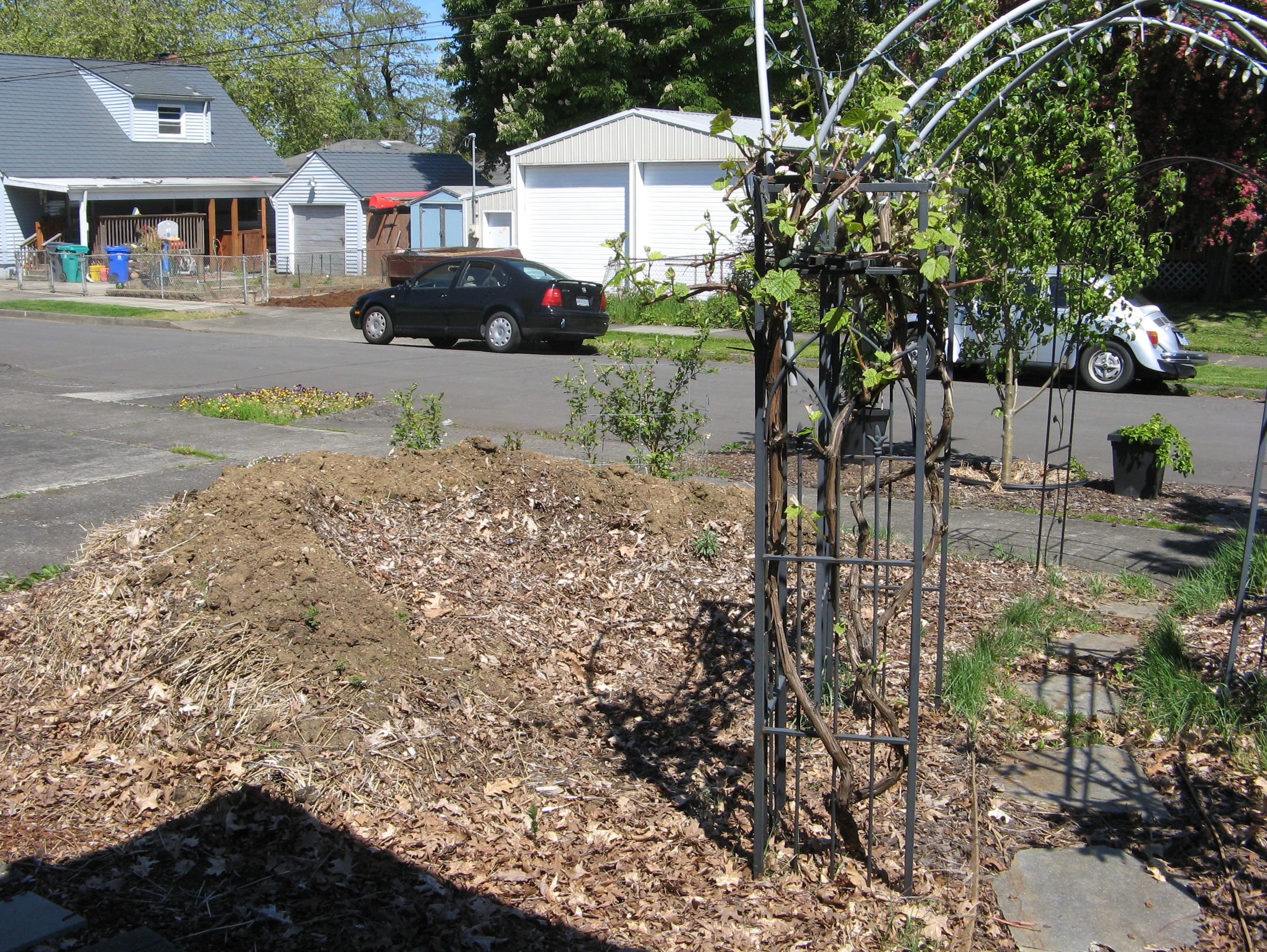
Spring finally arrived with sunny days interspersed with gentle rain. It was time to order a truckload of lovely rich soil, six cubic yards to be exact. This would be enough to cover the foundation of my huglekultur and the adjacent flower bed.


Huglekultur is ready for soil.

Huglekultur is ready for soil.


I considered buying bags of soil but realized that would be ridiculous. The good folks at City Farm told me about their soil supplier and I placed my order with Recology Oregon Material Recovery in Portland.


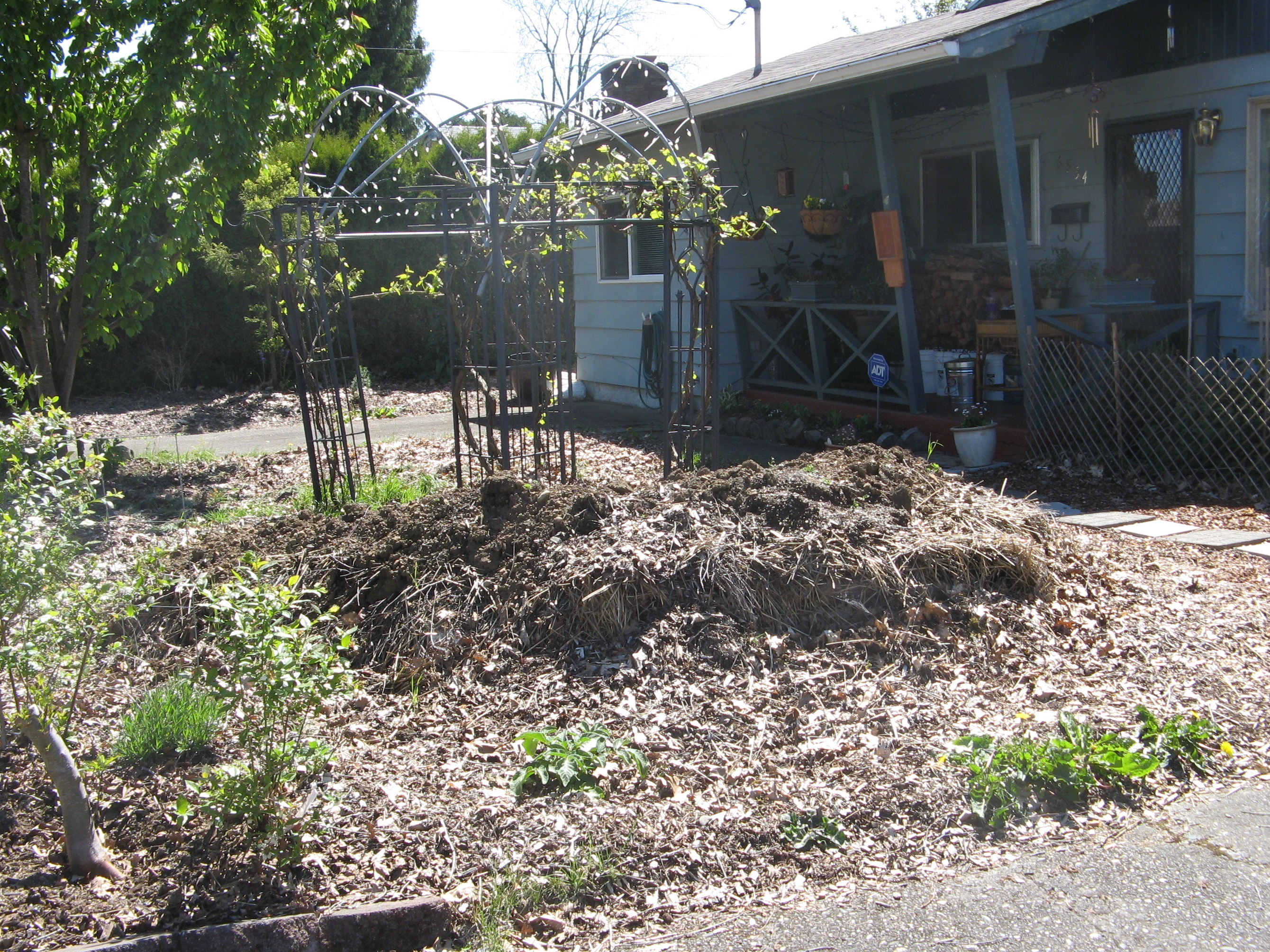
West side of the huglekultur

West side of the huglekultur


Leaves cover all of the remaining grass in the yard

Leaves cover all of the remaining grass in the yard


Of course it promptly rained for a week. I called the supplier and said we had best wait for a patch of at least three sunny days. After a couple more weeks we had our sunny window and the soil arrived.

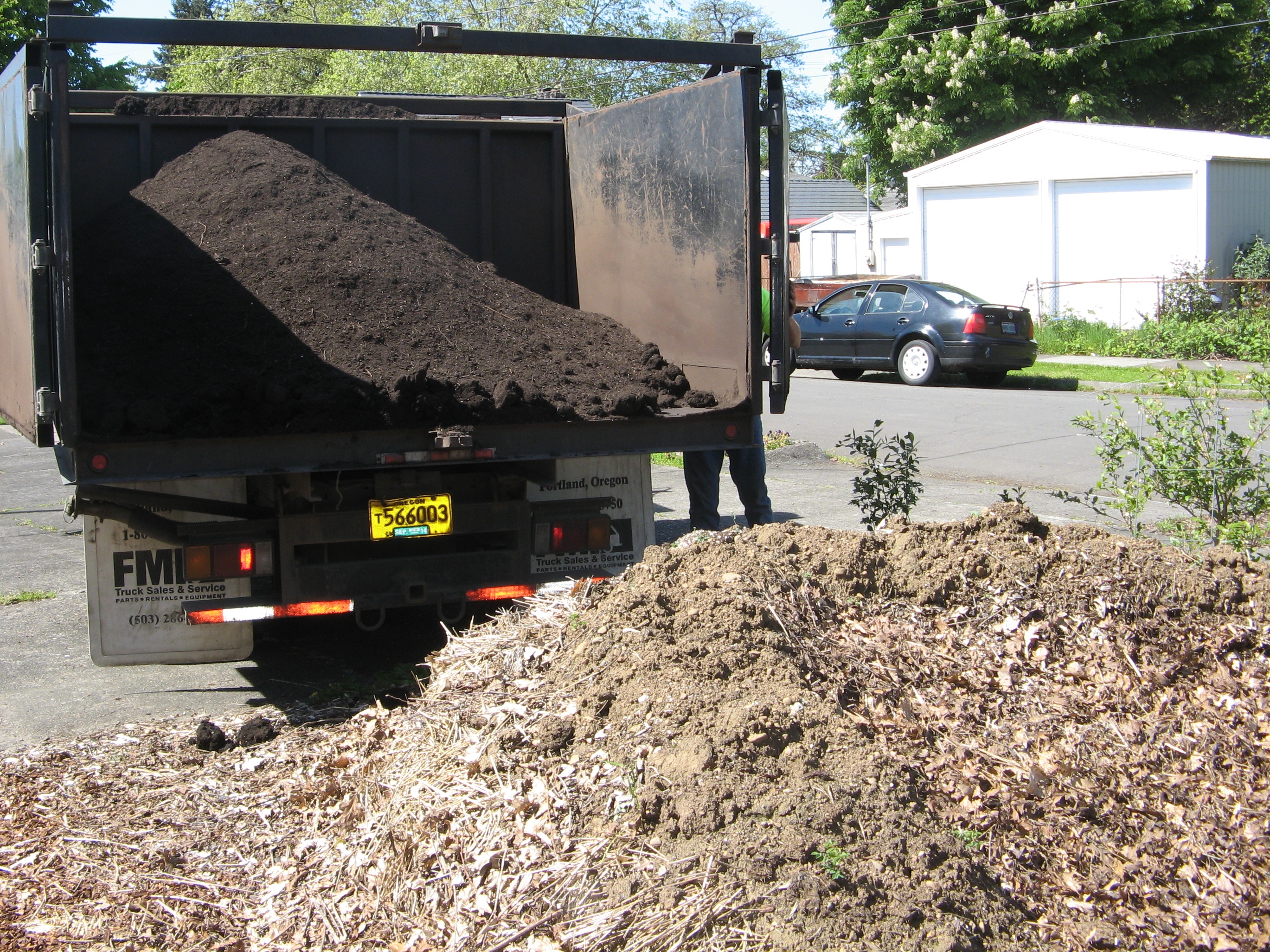
Delivering the soil as close as possible

Delivering the soil as close as possible


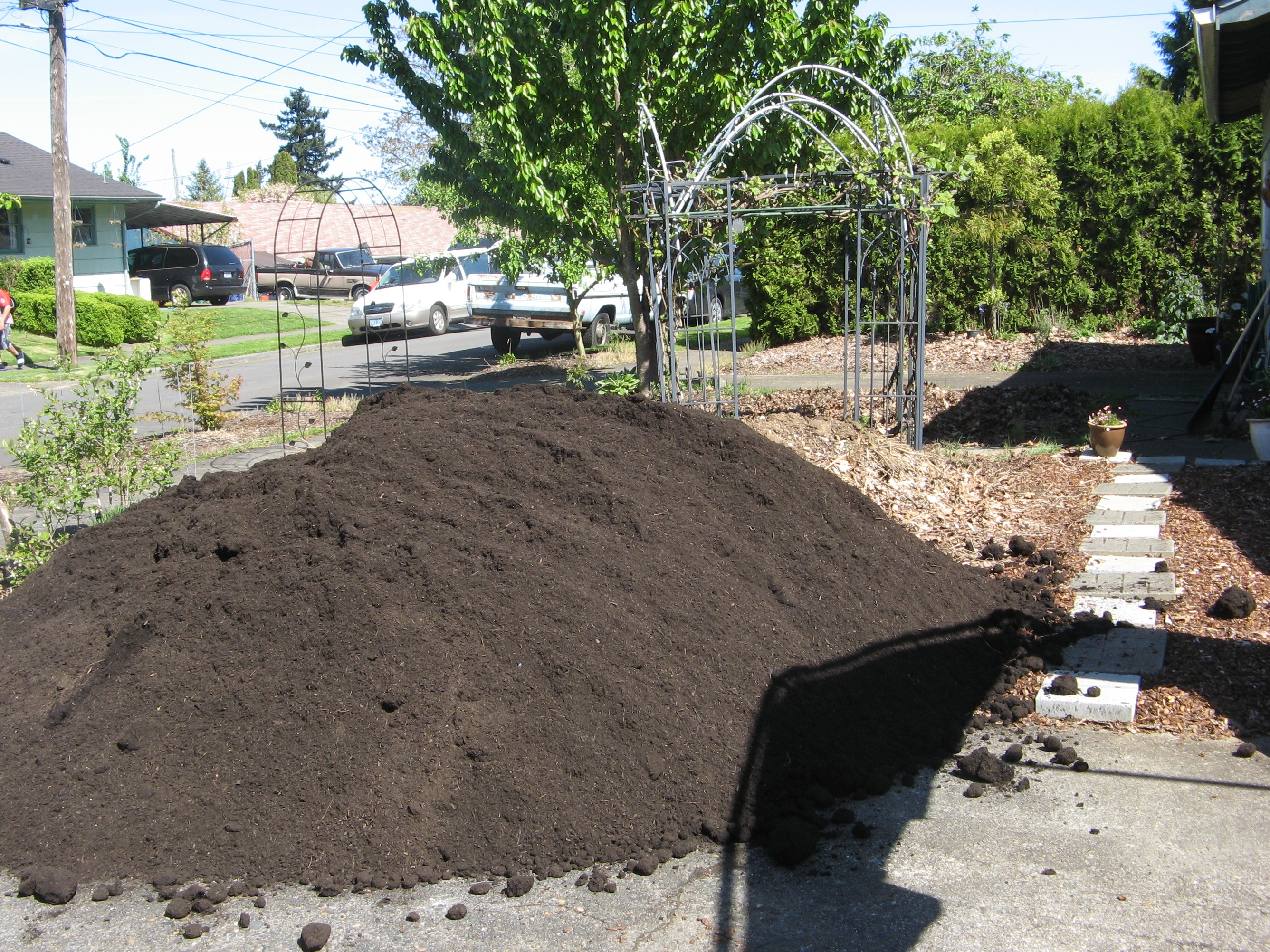
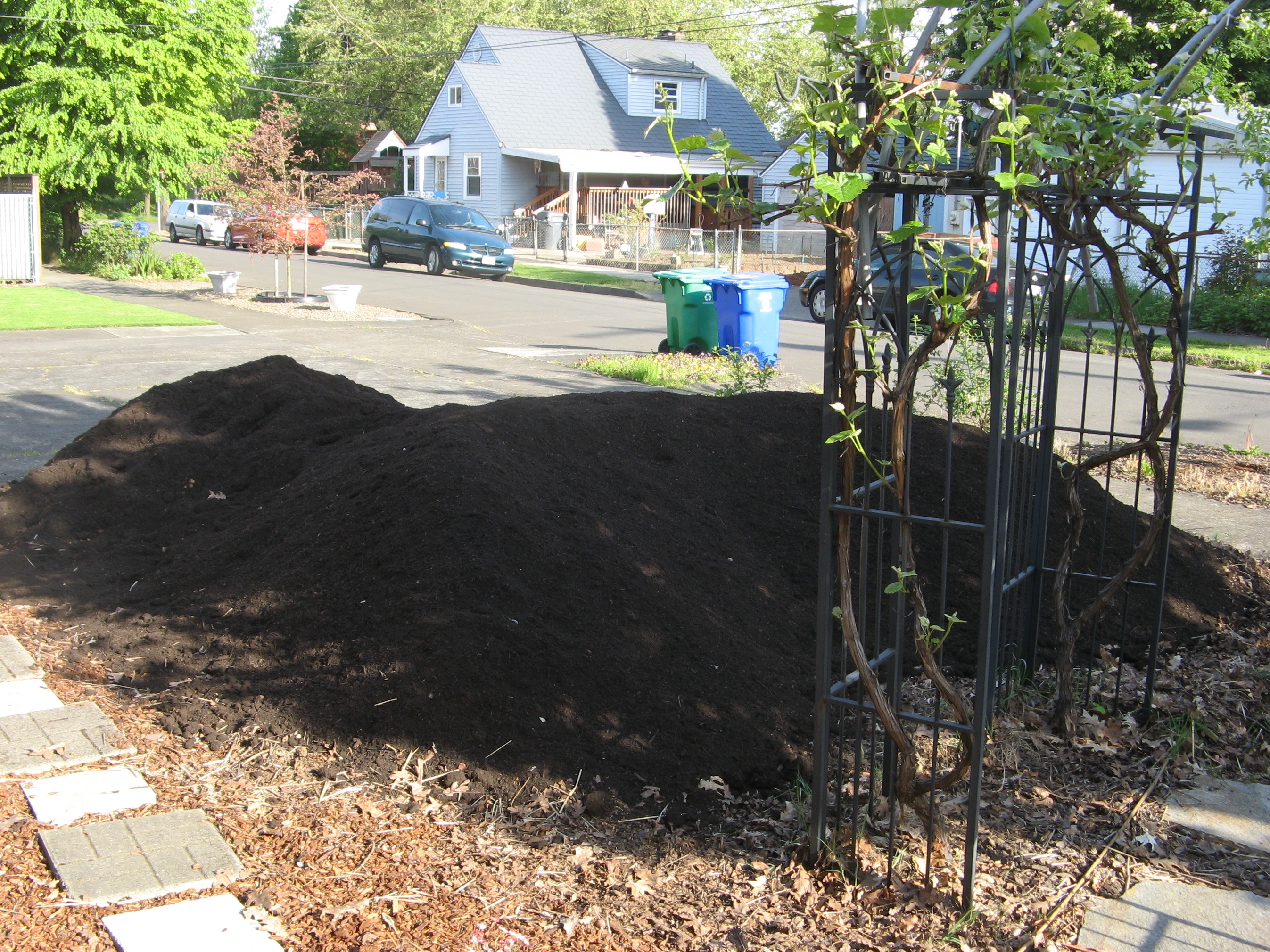
Six cubic yards of lovely soil

Six cubic yards of lovely soil


Then it has to be shoveled

Then it has to be shoveled


Of course, all of that lovely soil doesn’t just move itself into position. Lots and lots of shoveling was needed to move it onto the huglekultur and completely cover the foundation. The sunshine held and it took several days to get it in place.


Moving the soil into place

Moving the soil into place


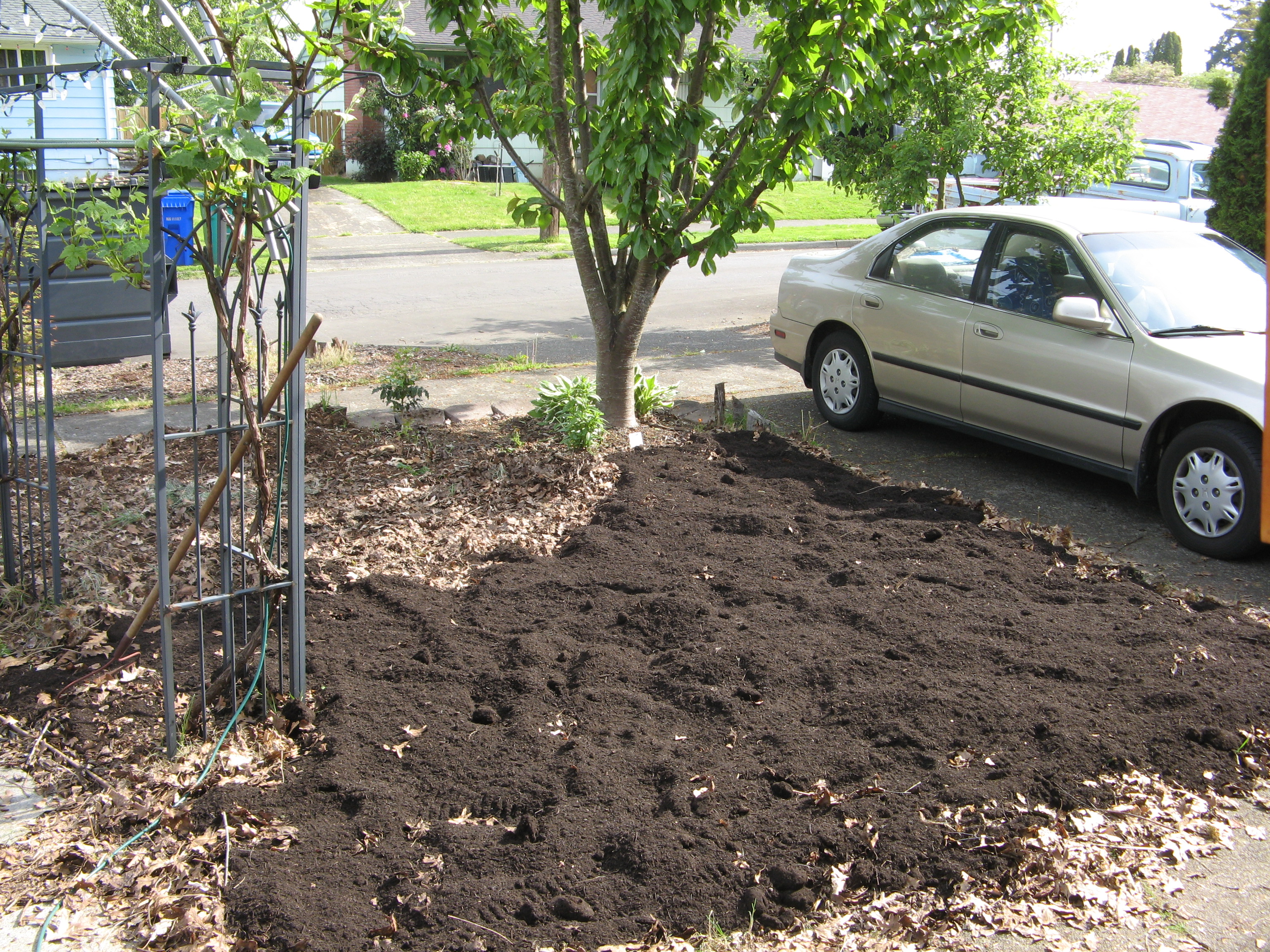
Gradually, the huglekultur was covered and then it was time to move the soil over to the adjacent flower bed on the other side of the grape arbor. My neighbor helped me with her wheelbarrow and that helped the job go faster. I raked the soil to make an even cover over the leaves.


Adding soil in the flower bed

Adding soil in the flower bed


Over the winter, the leaves packed down and formed a good cover over the grass. I didn’t put down plastic or paper under the leaves because I wanted to be able to plant in the spring. Seven families brought leaves from their yards to mine so it was a wild collection of different types. From a foot deep, the leaf pack reduced to several inches. The ample rain had helped degrade and compress the leaves.


The soil was spread evenly over the flower bed and the huglekultur and the rains were coming again but the sun would return and soon it would be time to plant. I wanted to create a place where butterflies and hummingbirds felt welcome. There would be no chemicals in my garden. Veggies on the huglekultur and flowers in the adjacent beds, with white and red grapes climbing the arbor in between. Ahhhhh, spring.

Time to plant

Time to plant

Posted by: kdeversblog | January 4, 2014

Huglekultur

Logs and branches form the foundation

Logs and branches form the foundation

The raised bed I’m constructing in my front yard is called a huglekultur. The foundation is made up of  logs and branches.

The branches are covered with leaves and straw.

The next layer is straw and leaves

The next layer is straw and leaves

Next I’ll add soil and manure. Since I’m building this  during the winter, I’ll plant  some winter peas for a green manure. It will be ready for planting in the spring.

For more info here is a website that inspired me. Www.richsoil.com/huglekultur/

Posted by: kdeversblog | December 7, 2013

Visiting the Hancocks

Lafayette, CA 2013

Lafayette, CA 2013

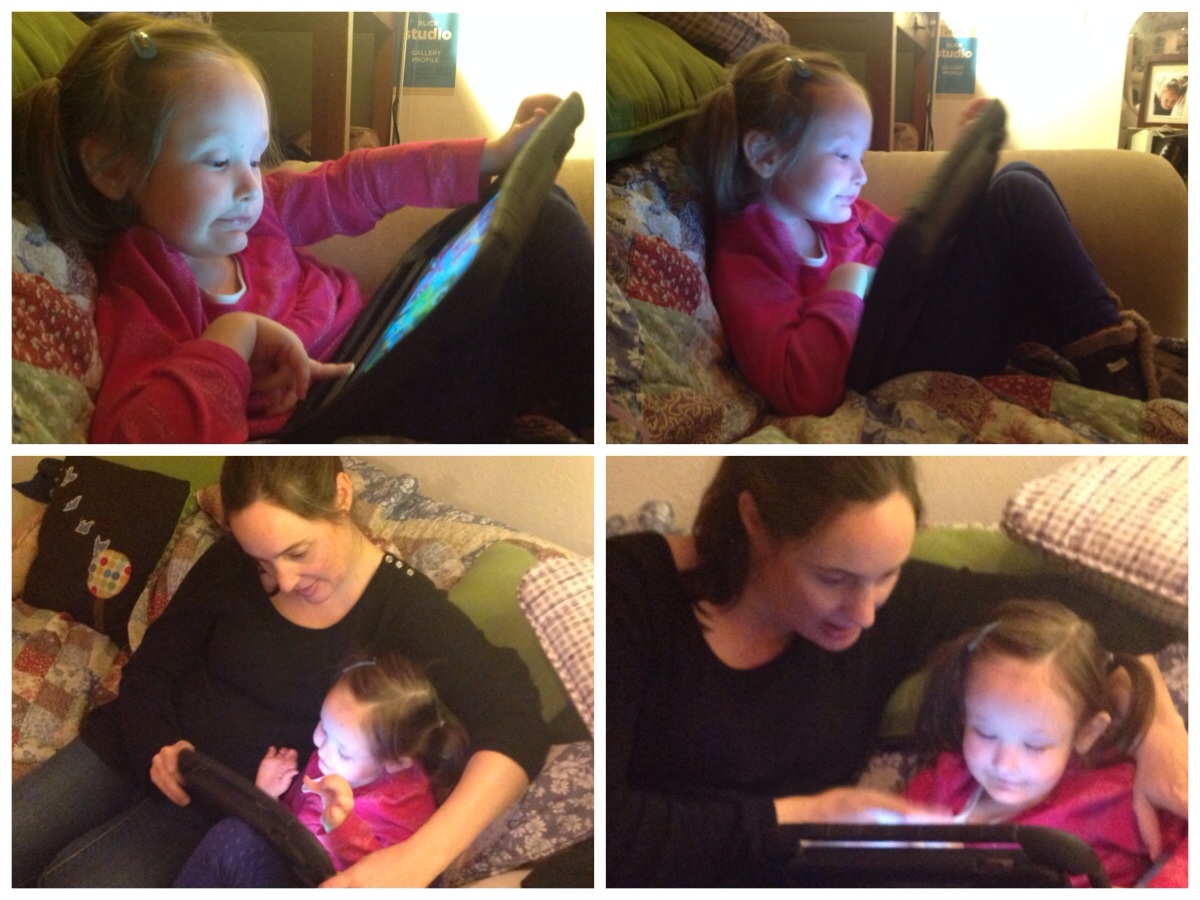
I had a delightful visit with Lesley and Tim Hancock last night. Daughter Sierra was there also and kept busy with her iPad. It was cold and rainy outside but we were warm and cozy in their apartment in Lafayette, CA.

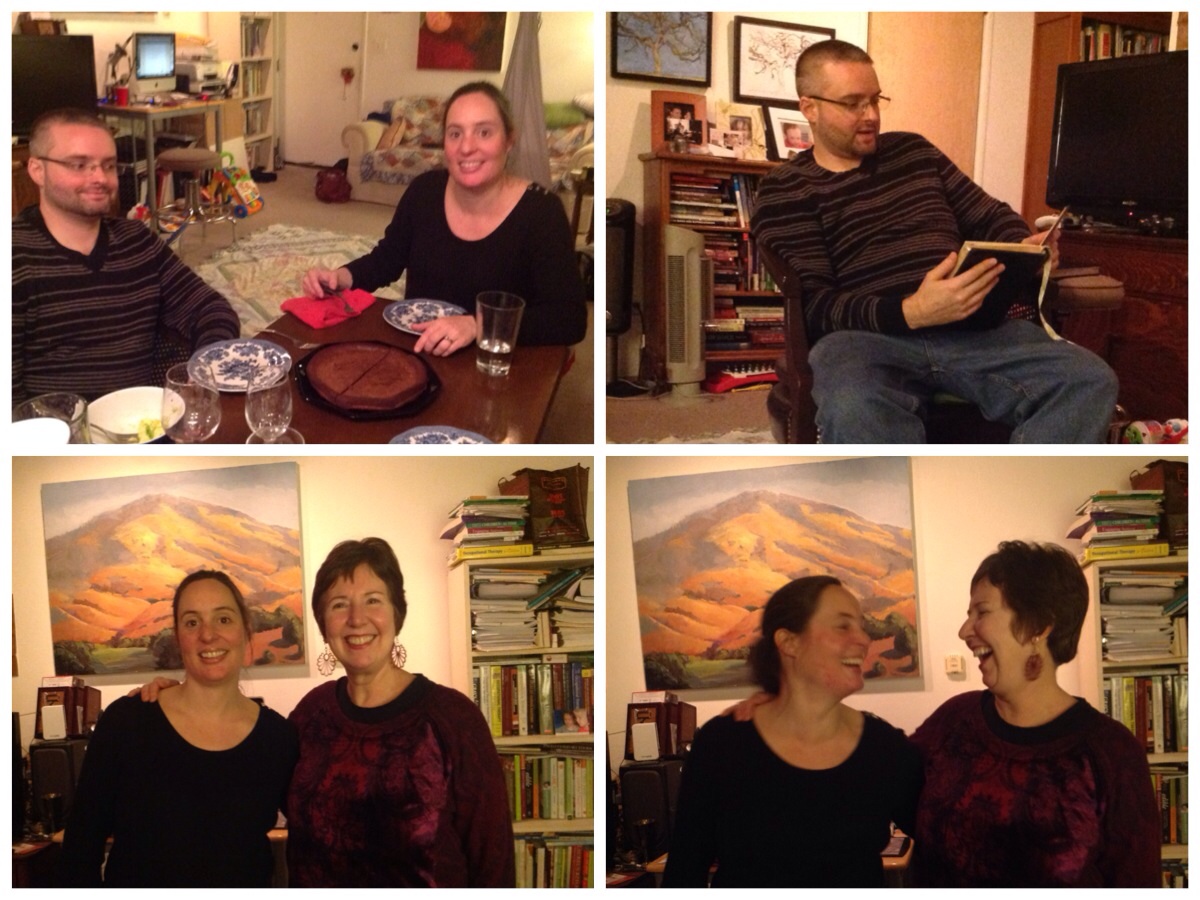
Lesley fixed a delicious and healthy paleo meal including a chocolate torte that was too good!  Tim read several of his poetic stories that are future children’s books and we set up a blog for him. I look forward to seeing his first blog post and linking to his site. I hope to be his first subscriber!

Lafayette, CA Dec. 2013

Lafayette, CA Dec. 2013

Lesley is glowing with her second pregnancy, a boy they will name Miles. She is due in a few weeks and she’s looking forward to not being pregnant anymore. I can definitely relate! Both Tim and Lesley are loving parents and cherish little Sierra.

My niece Lesley, husband Tim, and daughter Sierra.

My niece Lesley, husband Tim, and daughter Sierra.

Posted by: kdeversblog | November 17, 2013

Apple Pressing 2013

Fall is the time when apples are ripe and ready to be pressed into juice that tastes like sunshine. Bill, Elli, and I visited Renee and John who do an apple pressing on their back deck each autumn. It was a beautiful sunny day, perfect for learning how to turn apples into juice.

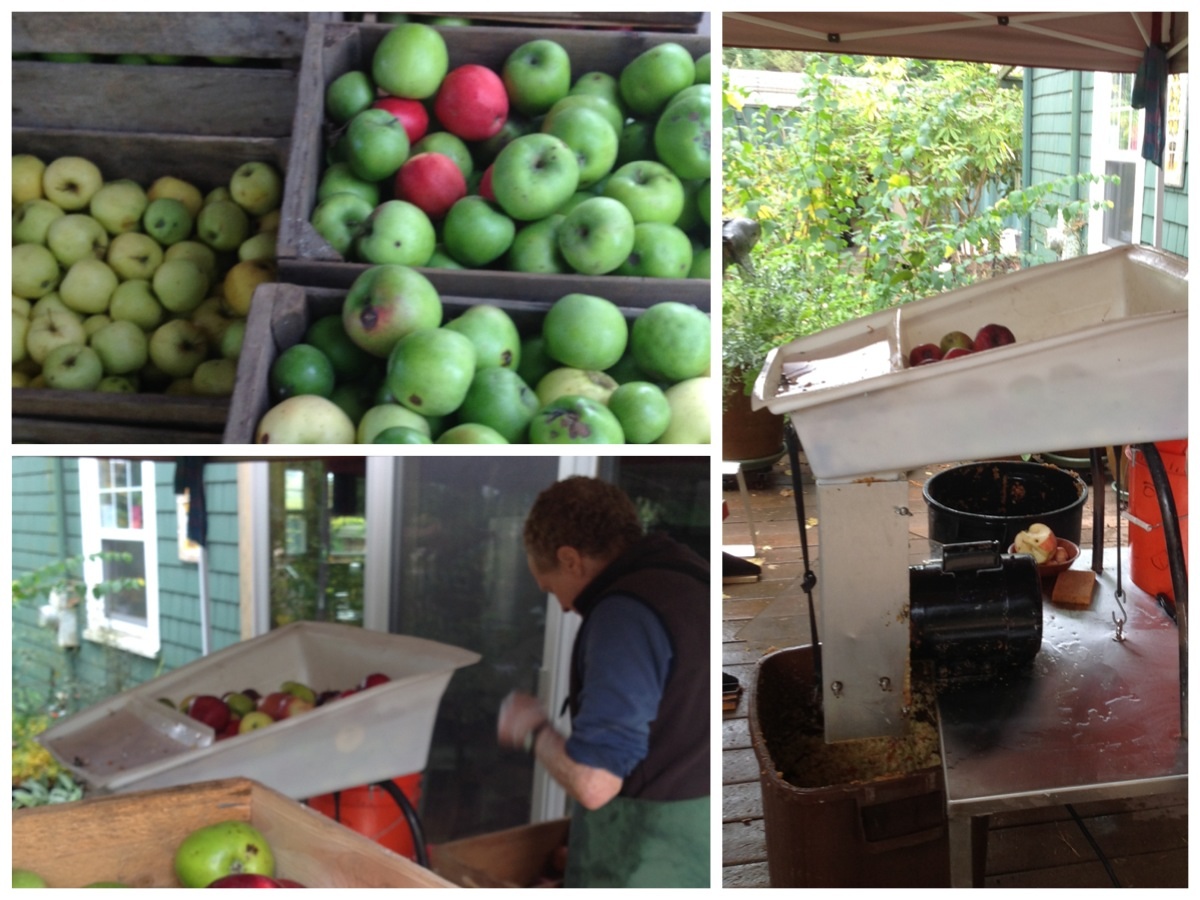
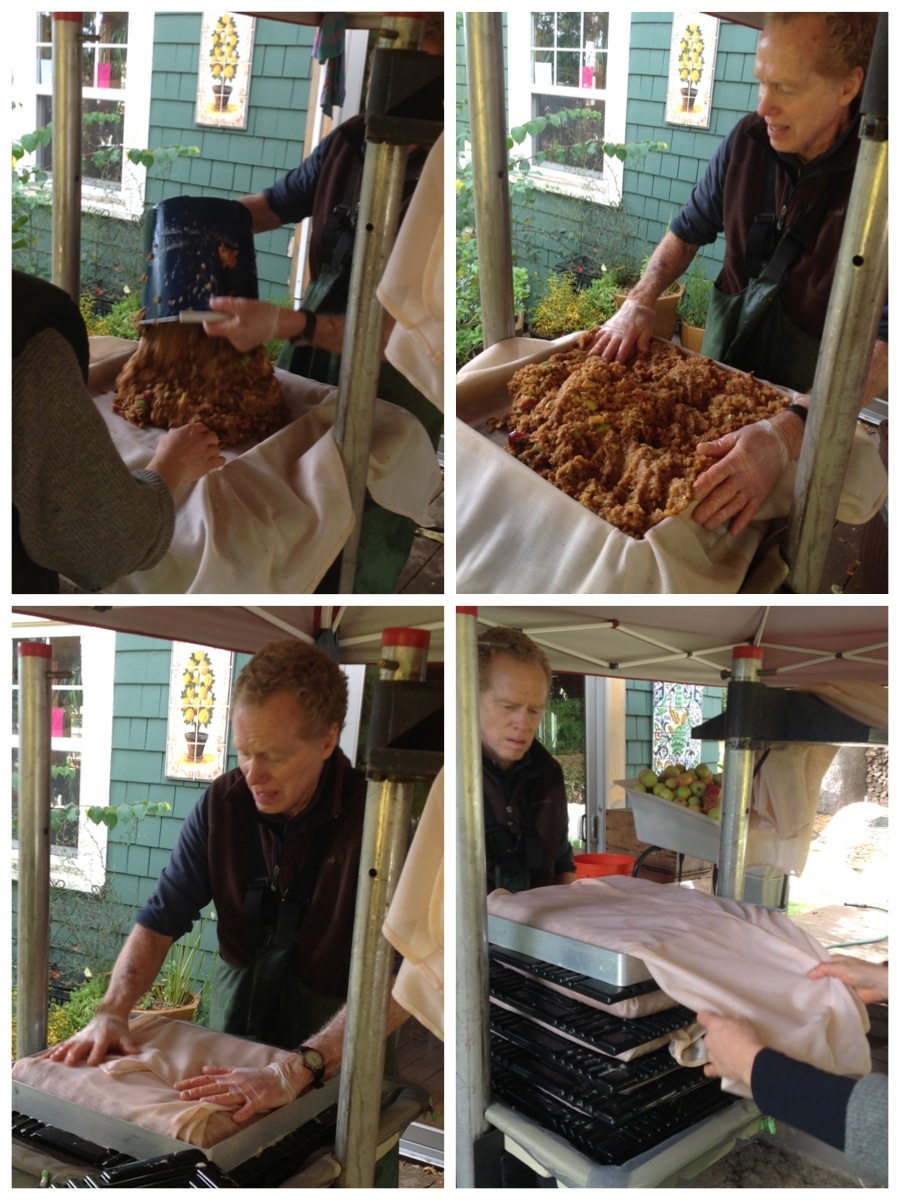
First the apples must be crushed into a slurry before they are pressed. It is best to use a variety of sweet and tart apples to get a more complex and interesting flavor. John had a mechanical grinder for this process and that saves a tremendous amount of work. The apples don't need to be perfect but they shouldn't be wormy or diseased.

1. First the apples must be crushed into a slurry before they are pressed. It is best to use a variety of sweet and tart apples to get a more complex and interesting flavor. John had a mechanical grinder for this process and that saves a tremendous amount of work. The apples don’t need to be perfect but they shouldn’t be wormy or diseased.

John uses a hydraulic press that he controls with a foot bar that gradually pushes the weight upward. The apple juice flows into the tank through tubes. Spigots in the base of the tank are opened for bottling. Then we are ready to taste. Swish the juice around in your mouth so that the saliva helps with digestion and don't drink too much. Otherwise you'll experience some "urgent cleansing" that may not be pleasant.

3. John uses a hydraulic press that he controls with a foot bar that gradually pushes the weight upward. The apple juice flows into the tank through tubes. Spigots in the base of the tank are opened for bottling. Then we are ready to taste. Swish the juice around in your mouth so that the saliva helps with digestion and don’t drink too much. Otherwise you’ll experience some “urgent cleansing” that may not be pleasant.

Renee and John have created a beautiful and highly functional home. Bee hives, raised vegetable beds, grapes, and berry plants. I loved the metal sculptures that were tucked away throughout the landscape. The stone fountain wasn't running but was still lovely and the fire pit arbor was a metal dome that I could imagine covered in blossoms earlier in the year.

Renee and John have created a beautiful and highly functional home. Bee hives, raised vegetable beds, grapes, and berry plants. I loved the metal sculptures that were tucked away throughout the landscape. The stone fountain wasn’t running but was still lovely and the fire pit arbor was a metal dome that I could imagine covered in blossoms earlier in the year.

image

A metal frame is used as a guide for each layer of apples. The cloth is wrapped around the apples to keep them in place but let the juice out. The layers are separated by metal grids and about 10 - 12 layers are built.2. A metal frame is used as a guide for each layer of apples. The cloth is wrapped around the apples to keep them in place but let the juice out. The layers are separated by metal grids and about 10 – 12 layers are built.

Posted by: kdeversblog | November 17, 2013

Foothills Alpacas

imageFoothills AlpacasFoothills Yarn and Fiber

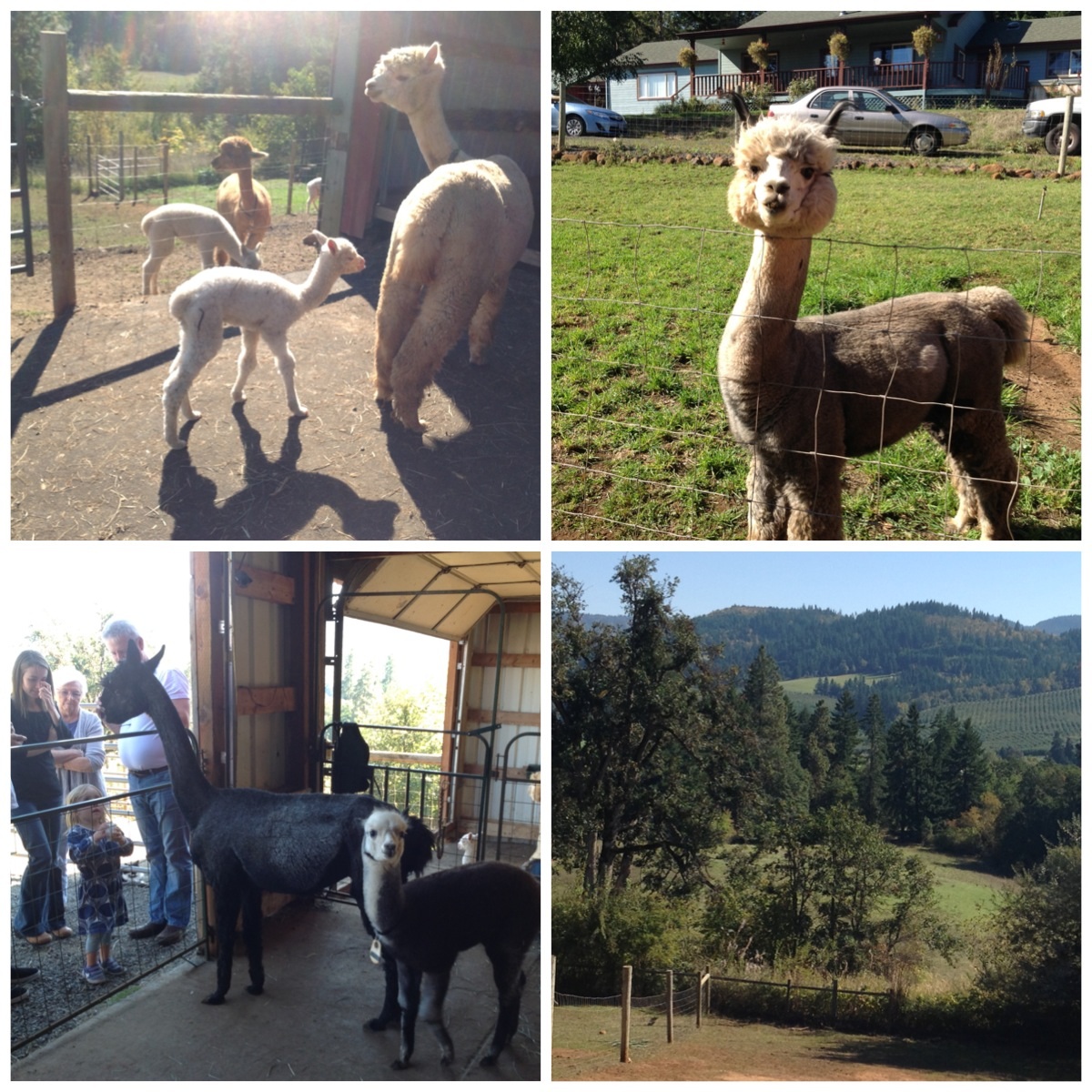
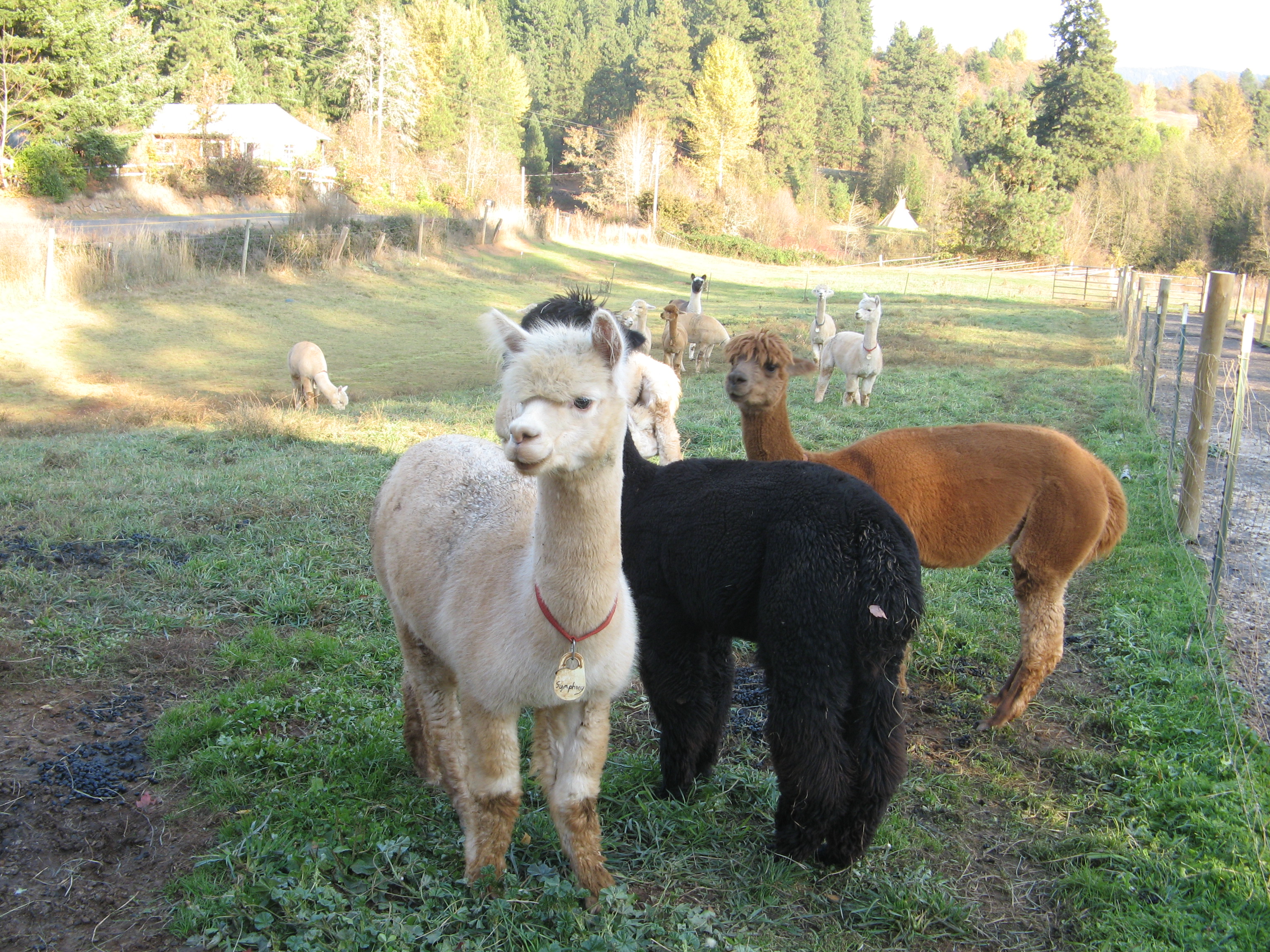
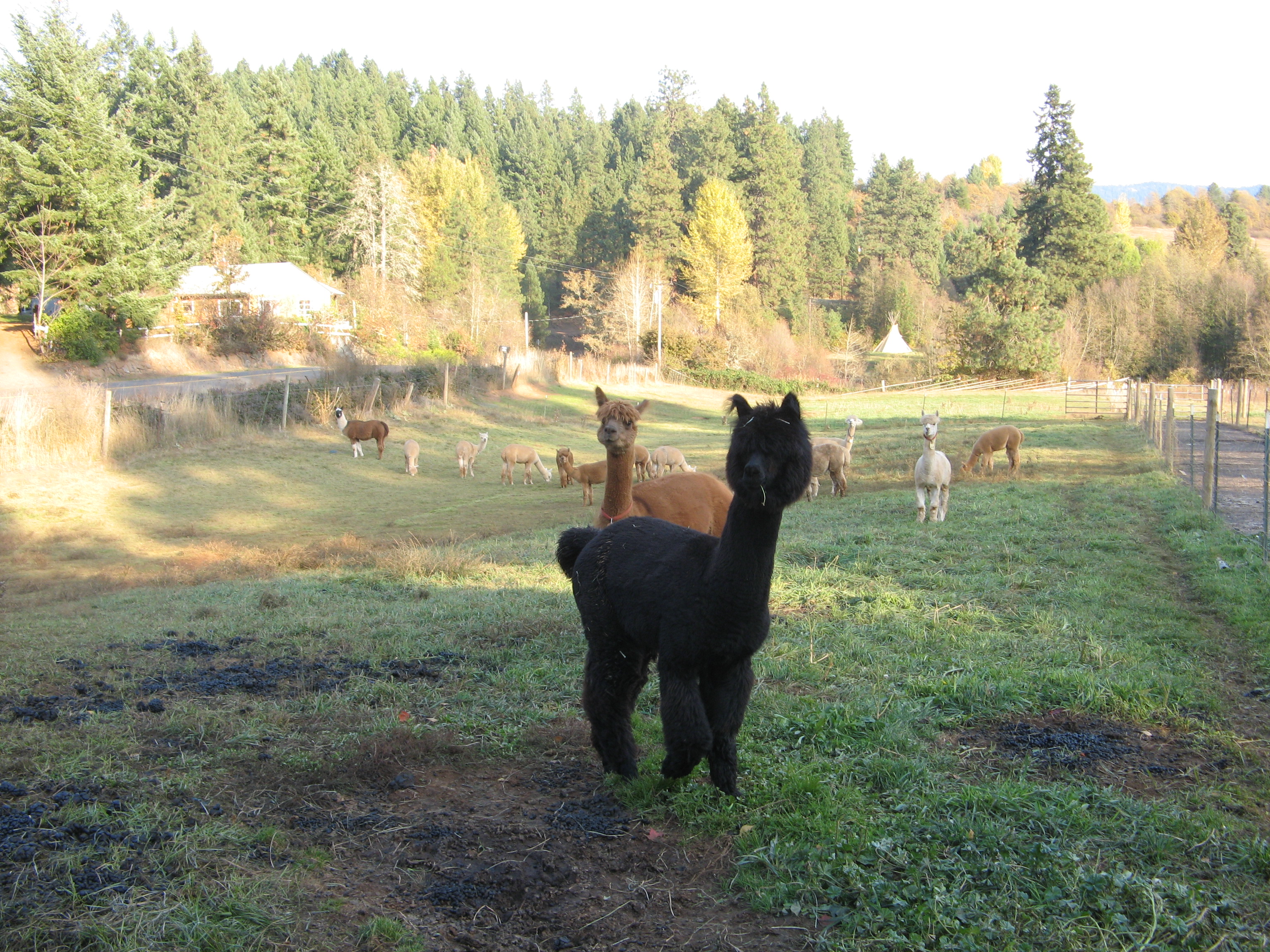
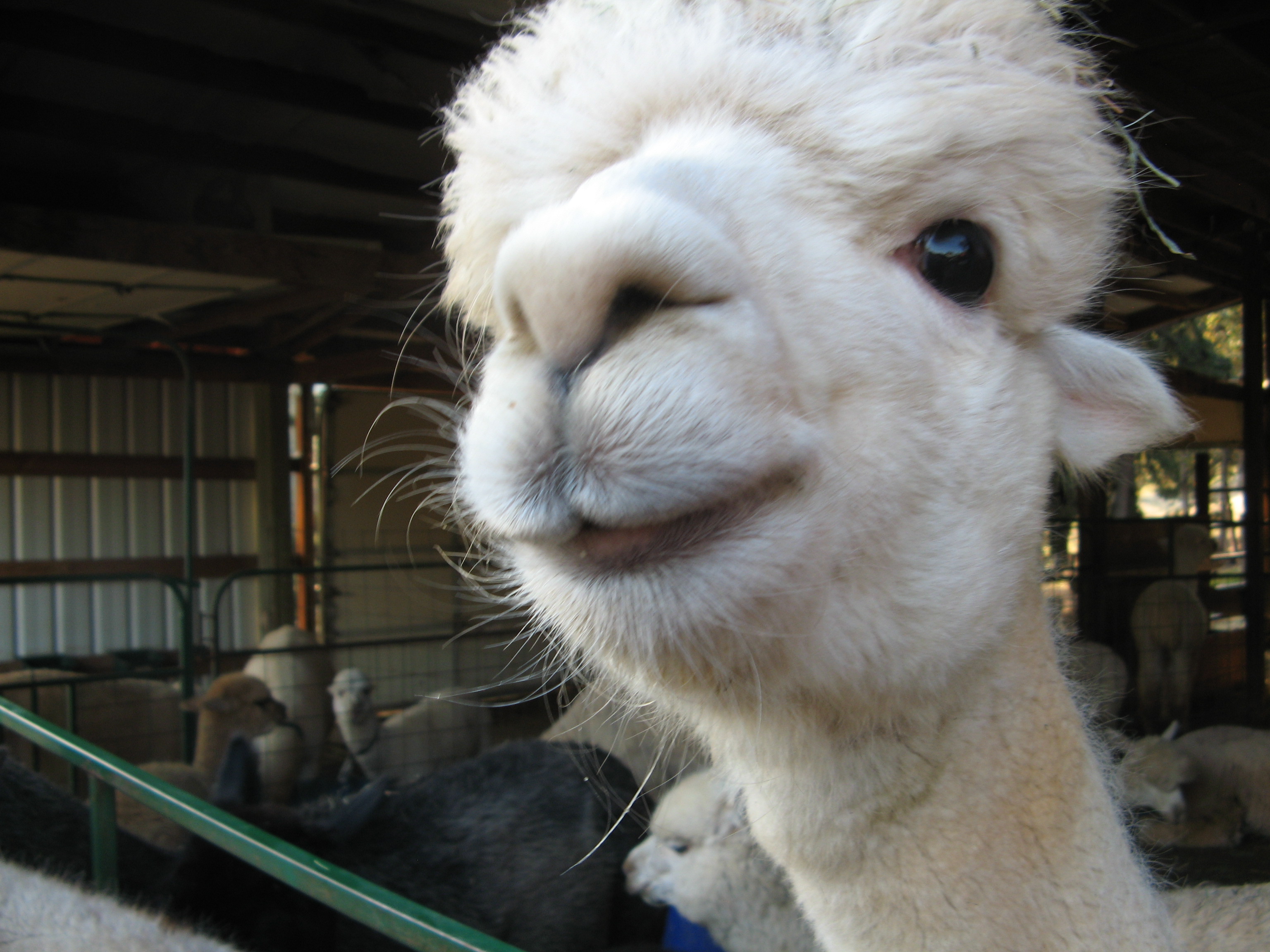
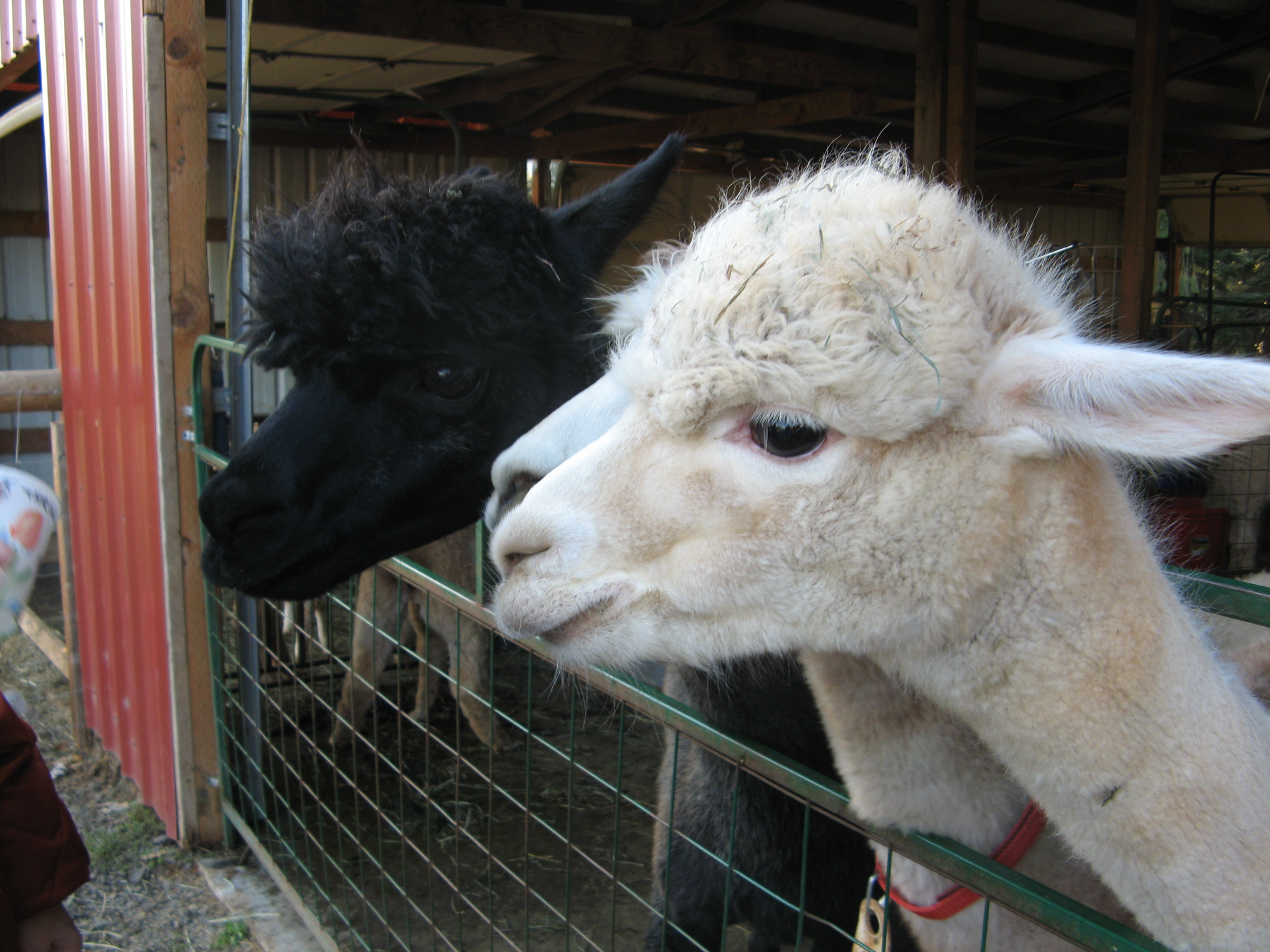
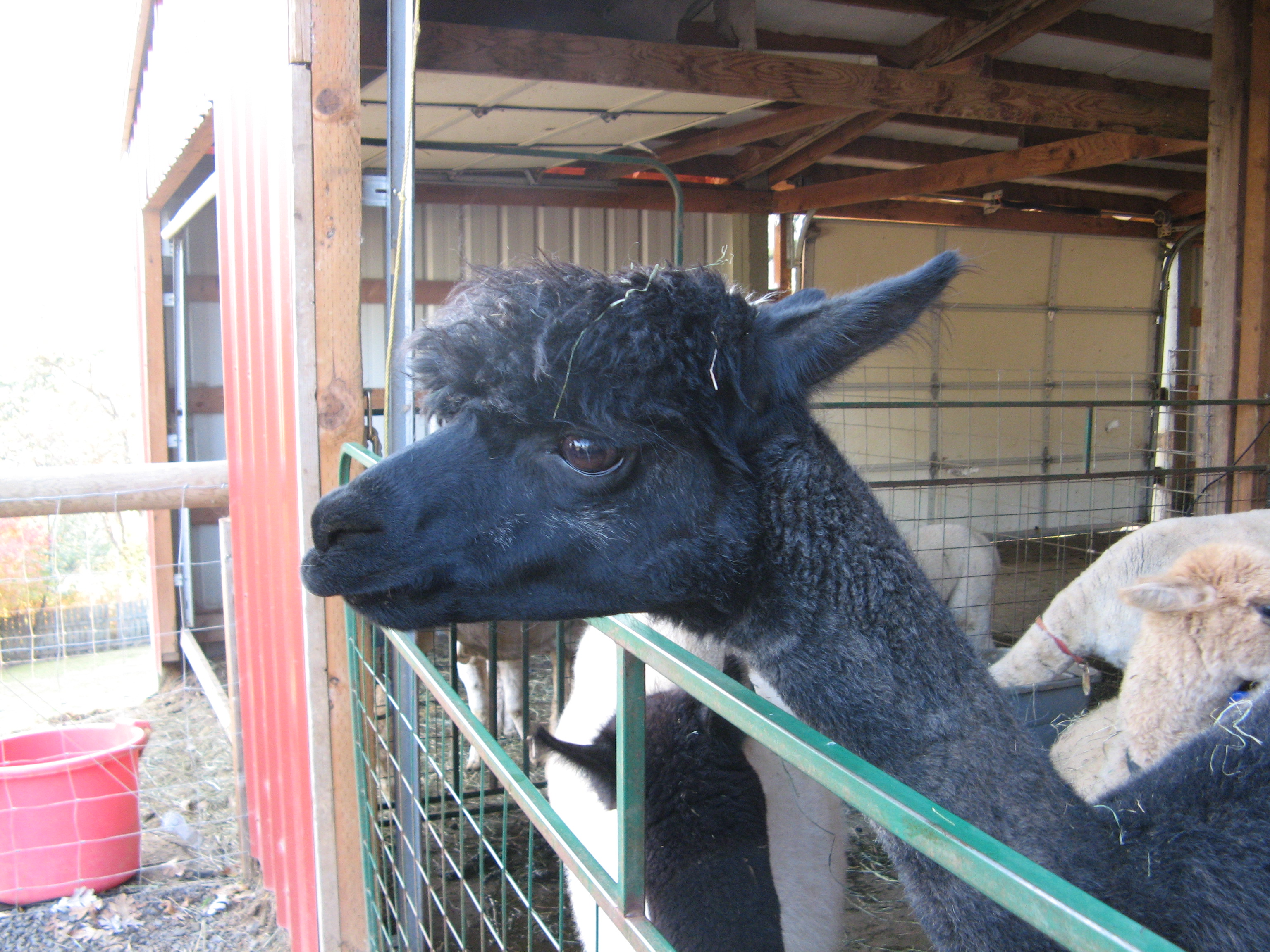
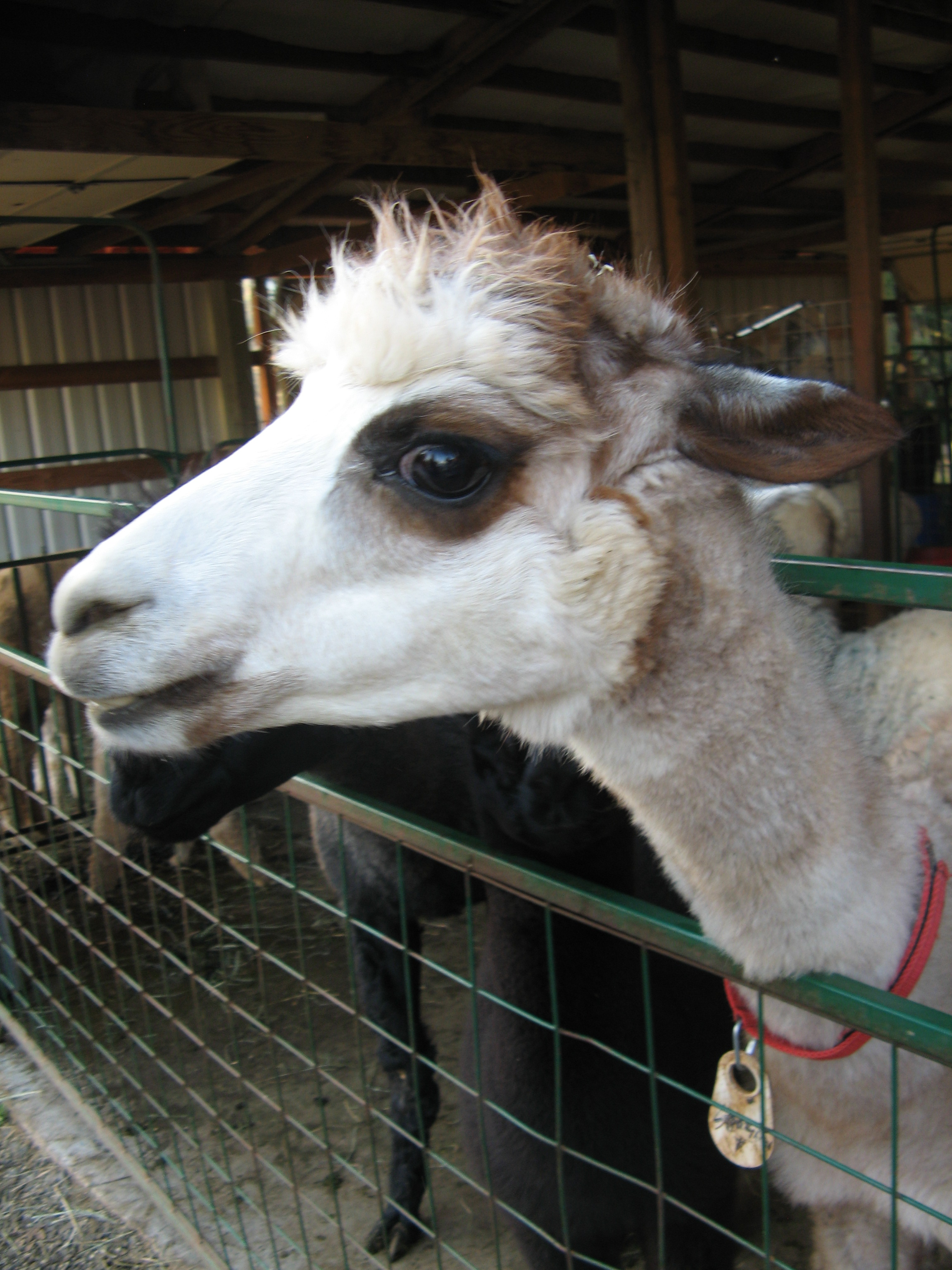
Janet and I made our annual fall trek to Hood River to visit our friends Connie and Thomas Betts. It was a gorgeous day and we had fun petting and feeding the gentle alpacas and holding the two day old baby. Alpacas are curious and seem to be always smiling. Their wool is warmer and softer than sheep wool so I added to my collection of alpaca socks. Foothills yarn and fiber is a wonderful place to visit and their store (online and at the ranch) is a delight. There you can buy yarn of different colors and know the name of the alpaca who gave the wool, you might even be able to feed her some pellets and pet her soft head. Connie and Thomas are living the good life, that’s for sure!

Posted by: kdeversblog | July 10, 2013

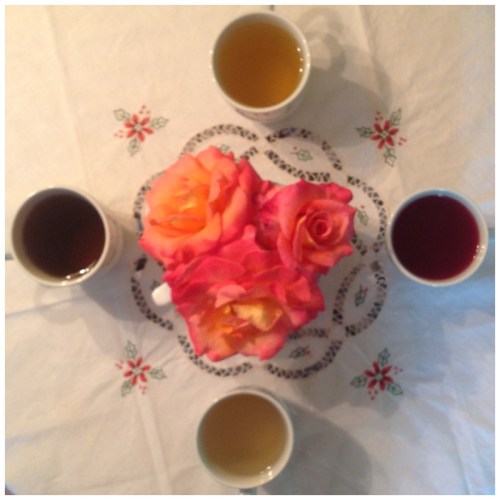
Four cups of tea

Four cups of tea

Tea cups top to right – ginger and turmeric; hibiscus and rose; mint and lemon balm; nettle and mullein.

Posted by: kdeversblog | January 11, 2013

Cascade Alpacas of Oregon

It is always a thrill to visit Connie and Thomas at their Aplaca ranch in Mt. Hood. My friend Janet and I chose a lovely fall day in 2012 to make the drive from Portland to Cascade Alpacas of Oregon. Here’s a link to their website: http://www.cascadealpacas.com/

View of the valley and mountains.

View of the valley and mountains.

As soon as the weather starts getting chilly I begin wearing my alpaca socks. The alpaca wool is much easier to wear than sheep wool and lasts longer. It also gets softer with wear and I never have the shrinkage that can happen with sheep wool. Of course I wash them in cold and hang them up to dry. They dry fairly quickly so that’s not a problem.

There were some young alpacas on the farm and we had fun watching them as well as feeding the adults. Kids love to visit the farm and everyone loves the store. Thomas has become a skilled weaver and his rugs are in high demand.

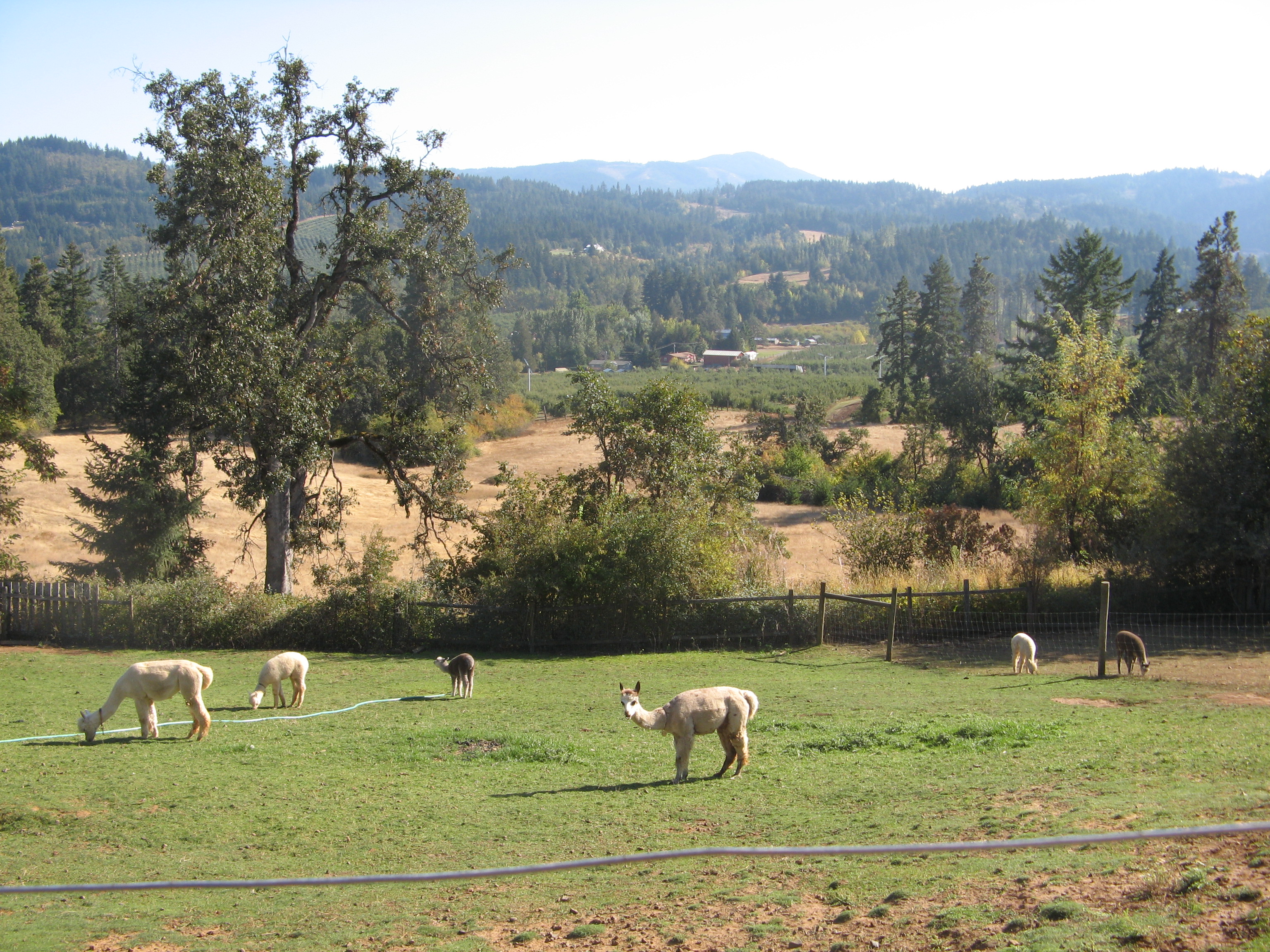
Cascade Alpacas in the field

Cascade Alpacas in the field

Alpacas come in many different shades from pure white to midnight black. In the store there is yarn that retains its natural shade and Connie can tell you which Alpaca it came from. They all have names of course.

Connie and Thomas keep detailed records of births, shearings, and all things alpaca. When the alpacas are sheared they have a few days of confusion. Since their wool, and their familiar smells are gone, they don’t recognize one another. So the alpacas are a bit confused and think they are suddenly among strangers. After a short time their unique fragrances return and they are once again friends and family.

These are docile, curious creatures who always seem happy to greet visitors. In order to protect the alpacas, the Llama that you see in the distance on the left keeps a close watch on the herd. He will scare away predators since he is larger and more aggressive. They haven’t had a single loss since he has taken over guard duty.

The Llama is keeping guard.

The Llama is keeping guard.

Be sure to check out the link to the Cascade Alpacas of Oregon. You can feed and pet the alpacas and marvel at their incredibly soft fur. Visit the store and pick up some yarn or a handmade hat or scarf. You may even want to order one of Thomas’s rugs!

Remember, the alpacas just want to say hello but they are a bit shy so be gentle and they will come to you because they are, above all, curious!

Hello!

Hello!

Very friendly and curious

Soft woolly head

Soft woolly head

She's hoping for a handout

She’s hoping for a handout

Posted by: kdeversblog | January 11, 2013

Cascade Alpacas of Oregon

It is always a thrill to visit Connie and Thomas at their Aplaca ranch in Mt. Hood. My friend Janet and I chose a lovely fall day in 2012 to make the drive from Portland to Cascade Alpacas of Oregon. Here’s a link to their website: http://www.cascadealpacas.com/

View of the valley and mountains.

View of the valley and mountains.

As soon as the weather starts getting chilly I begin wearing my alpaca socks. The alpaca wool is much easier to wear than sheep wool and lasts longer. It also gets softer with wear and I never have the shrinkage that can happen with sheep wool. Of course I wash them in cold and hang them up to dry. They dry fairly quickly so that’s not a problem.

There were some young alpacas on the farm and we had fun watching them as well as feeding the adults. Kids love to visit the farm and everyone loves the store. Thomas has become a skilled weaver and his rugs are in high demand.

Cascade Alpacas in the field

Cascade Alpacas in the field

Alpacas come in many different shades from pure white to midnight black. In the store there is yarn that retains its natural shade and Connie can tell you which Alpaca it came from. They all have names of course.

Connie and Thomas keep detailed records of births, shearings, and all things alpaca. When the alpacas are sheared they have a few days of confusion. Since their wool, and their familiar smells are gone, they don’t recognize one another. So the alpacas are a bit confused and think they are suddenly among strangers. After a short time their unique fragrances return and they are once again friends and family.

These are docile, curious creatures who always seem happy to greet visitors. In order to protect the alpacas, the Llama that you see in the distance on the left keeps a close watch on the herd. He will scare away predators since he is larger and more aggressive. They haven’t had a single loss since he has taken over guard duty.

The Llama is keeping guard.

The Llama is keeping guard.

Be sure to check out the link to the Cascade Alpacas of Oregon. You can feed and pet the alpacas and marvel at their incredibly soft fur. Visit the store and pick up some yarn or a handmade hat or scarf. You may even want to order one of Thomas’s rugs!

Remember, the alpacas just want to say hello but they are a bit shy so be gentle and they will come to you because they are, above all, curious!

Hello!

Hello!

Very friendly and curious

Soft woolly head

Soft woolly head

She's hoping for a handout

She’s hoping for a handout

Posted by: kdeversblog | August 12, 2012

Potatoes and bees please

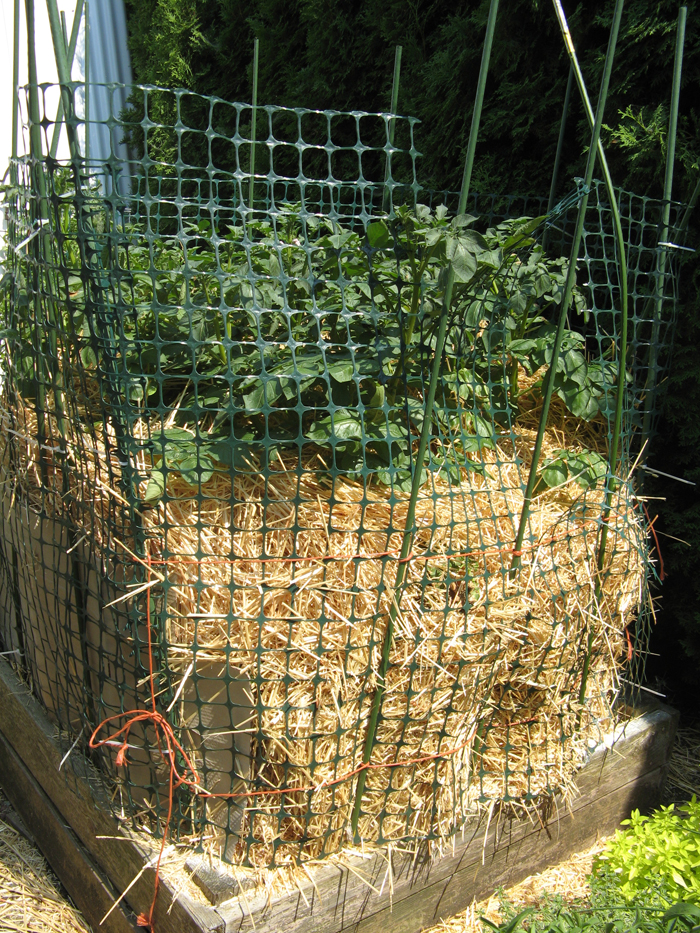
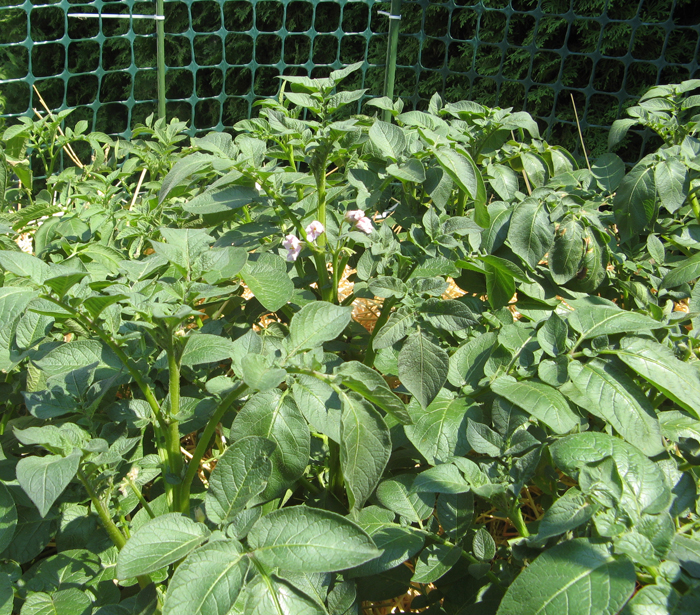
My potatoes are going wild. . . .


. . . and the bees are happy.


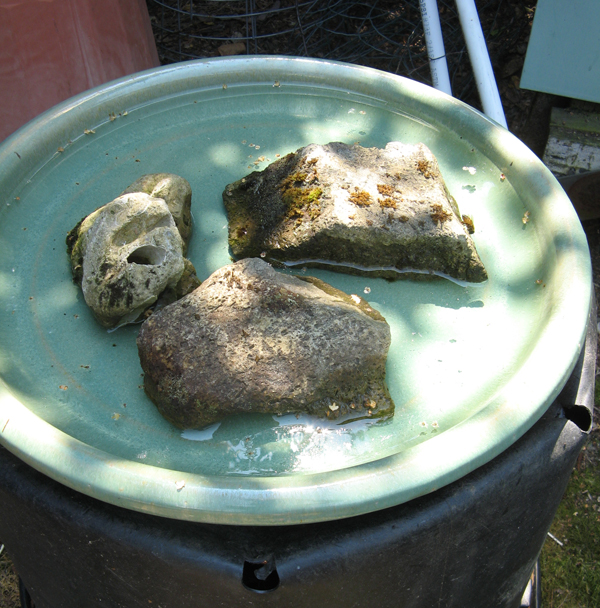
They seem to like their water bath and the hive is in the shade.


This is important since we’re having our hot August temps now – in the 90s. They are very calm bees and I love watching them.

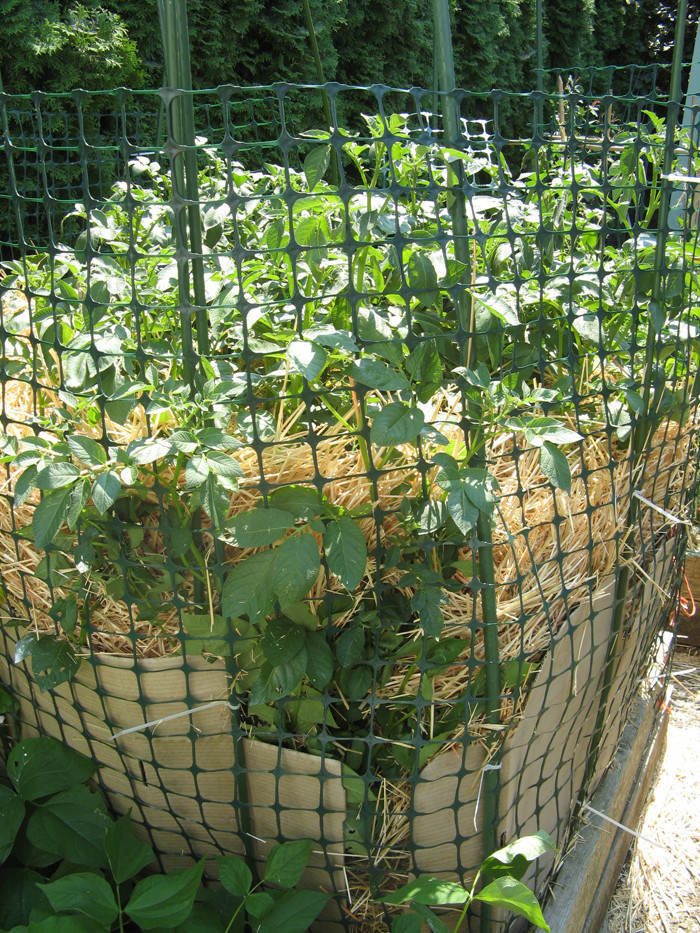
I’m trying something different with the potatoes this year. I planted them in the raised bed and secured some plastic fencing around half of the bed using posts. Then I placed sheets of cardboard on the inside and added dirt as the plants grew. I thought the cardboard would be plenty tall enough but they just kept growing. So, I added more dirt and then decided to add a straw bale. Now I’m wondering if I should add more straw! I do seem to grow potatoes really well and I love them so this is really fun.

Here are some photos of how they look in early August – and they are still growing!


Posted by: kdeversblog | August 12, 2012

Documentary DVDs worth watching

I have found that our public library is an amazing source for documentary DVDs that are fun to watch. Here is a list of the DVDs I have found most thought-provoking and enjoyable. Some of them are available on Netflix as well as the library. Even if you have some them before, many have been updated and well-worth watching again. It is also interesting to see how events have unfolded and compare our current situation with the information in the DVDs.

I also highly recommend watching the “behind the scenes” parts of the movies. Sometimes how the movie was made is every bit as fascinating as the movie itself. I hope you find this list useful and will add any that you like in a comment. (Please just documentaries that deal with issues relating to this website, not feature films.)

The People Speak: Based on Howard Zinn’s book “A People’s History of the United States.” The theme of this movie is “democracy is not a spectator sport.” This DVD is a treasure and I actually purchased it to add to my home stash. Howard Zinn died in 2010 at age 86 and he was still doing this performance at age 84. He was an inspiring person and a committed, life-long activist. This movie combines his narration with the dramatic readings by all my favorite actors.

Here’s a bit of the description from the DVD package: “The People Speak is a beautiful and moving film. . . [that] . . . features the actual word of rebels, dissenter, and visionaries from our past and present. These dramatic moments from our history are brought to life by a group of remarkable musicians and actors.”

Here’s the link: http://www.thepeoplespeak.com/film

Money as Debt I, II, and III. by Paul Grignon. I got the first two DVDs from the library and ended up purchasing the the third one. These DVDs are animated and the content really helped me understand the origins of money, how it works, and why we are in such a mess at this time. I also like the way Grignon presents a very cohesive alternative.

Here’s a bit of the description of the third DVD: ” . . .[it] presents a comprehensive picture of how money could work in the future. it is a blueprint full of surprising specifics for creating a whole new system applied with technologies that exist right now. Money as Debt III demonstrates in simple terms why our primitive concept of money is the ROOT cause of money system dysfunction.”

Here’s the link: http://www.moneyasdebt.net/

Considering Democracy: 8 things to ask your representative. The young woman film maker, Keya Lea Horiuchi wondered how the US was viewed by people in other countries. Everyone in the US talks about democracy but how is it practiced in other countries? This is a fun movie to watch, especially when you see the astonishment of people in other countries when they recognize how much better their social programs are than ours. The questions that Horiuchi raises are excellent and well-worth pondering.

Here’s a quote from the website: “Shot in ten countries, Considering Democracy weaves together seemingly different topics into an interconnected tapestry. People from around the world act as a mirror for Americans to see a reflection of political power in the United States.”

Here’s the link: http://consideringdemocracy.com/

Water Wars: When drought, flood, and greed collide. Clean water is one of the essentials of life on earth. This astonishing movie shows how too little, too much, or undrinkable water is an urgent world issue. In the Pacific Northwest we have a generous supply of clean water but it is essential that we understand what is happening to water in the rest of the world, including the US. Here’s an excerpt from their website:

“We have filmed on location for over two years: in Bangladesh, flood, drought and near-violent protest; in India the struggle of Indian activists against the prevailing dam mentality of the Indian Government and vested interests; in New Orleans after Katrina where the Dutch Crisis Team and its hi-tech pumping systems made a difference; in Holland where we examine its state-of-the-art canal/levee system. . . . . Can the Dutch – whose crisis teams and hi-tech pumps helped drain New Orleans after Katrina – pass on their hard won knowledge to Bangladesh and the rest of the globe where the ice caps are melting, the seas rising daily, and 80% of its fresh water is at risk from pollution and poison? Can the global community work together to deal with the impending calamity and perhaps avert it?”

Here’s the link:  http://www.waterwarsfilm.com/index.html

The Corporation. The film is based on the book, The Corporation: The pathological pursuit of profit and power by Joel Bakan. Many of us watched this movie when it first appeared. The newest version includes a lot of additional interviews, etc. Here’s a quote from the website:

“To assess the “personality” of the corporate “person,” a checklist is employed, using diagnostic criteria of the World Health Organization and the standard diagnostic tool of psychiatrists and psychologists. The operational principles of the corporation give it a highly anti-social “personality”: it is self-interested, inherently amoral, callous and deceitful; it breaches social and legal standards to get its way; it does not suffer from guilt, yet it can mimic the human qualities of empathy, caring and altruism. Four case studies, drawn from a universe of corporate activity, clearly demonstrate harm to workers, human health, animals and the biosphere. Concluding this point-by-point analysis, a disturbing diagnosis is delivered: the institutional embodiment of laissez-faire capitalism fully meets the diagnostic criteria of a “psychopath.””

Yes, corporations are very sick “people” indeed. Here’s a link: http://thecorporation.com/index.cfm?page_id=57

Inside Job: The global economic crisis of 2008 cost tens of millions of people their savings, their jobs, and their homes. This movie has won many awards because it presents the financial crisis in a logical way with engaging interviews. It will hold your attention because it is so well done but also because we are still living the results of the disaster.

The website is worth checking out, but I’ve included a wikipedia site because it is easier to access a description of the movie: http://en.wikipedia.org/wiki/Inside_Job_%28film%29

Dirt: the movie. My favorite part of this movie is the scene in India where an elderly man takes clay from his yard, places it on a pottery wheel, adds water, turns the wheel by hand, and forms it into a graceful clay urn. Delighted neighborhood children watch him from nearby windows. As he carefully sets the pot on the ground, we see a dozen other pots of varying sizes and shapes and we realize that this man turns dirt and water into lovely, functional items and has probably been doing this all his life. Unless you garden or farm you are probably not aware of the value of dirt. This movie broadens our understanding of dirt in its essential quality and as a source of joy as well.

Here’s a link: http://www.pbs.org/independentlens/dirt-the-movie/film.html

Building with Awareness. This movie shows what happens when an architect decides to use traditional and alternative building materials and techniques to build a “hybrid” home – and it makes me want to do the same. I’ve watched other DVDs on this topic and this is by far the best. I love the “straw bale” work party run by the guy with dangle earrings and a mohawk/pony tail. Here’s a quote from the website:

“Learn about green building by watching the construction of this straw bale house. This hybrid home generates all of its own electricity and incorporates passive solar heating and cooling. The aesthetics are influenced by the green construction materials, the use of natural materials, and basic solar design principles. Aesthetics are an important element of green building as a structure that looks good is more likely to be preserved for years to come”

Did I mention the home and setting in Arizona are beautiful as well? Here’s the link where you can get building plans and lots of great info: http://www.buildingwithawareness.com/

South of the Border – a film by Oliver Stone. My knowledge of South America is worse than spotty, but I learned a lot from this movie. The names of the leaders that we hear in the news and the countries came alive for me. It is a fascinating place and current events are more meaningful after watching this DVD. Here’s a quote from the website:

“There’s a revolution underway in South America, but most of the world doesn’t know it. Oliver Stone sets out on a road trip across five countries to explore the social and political movements as well as the mainstream media’s misperception of South America while interviewing seven of its elected presidents. In casual conversations with Presidents Hugo Chávez (Venezuela), Evo Morales (Bolivia), Lula da Silva (Brazil), Cristina Kirchner  (Argentina), as well as her husband and ex-President Nėstor Kirchner,  Fernando Lugo  (Paraguay), Rafael Correa (Ecuador), and Raúl Castro  (Cuba), Stone gains unprecedented access and sheds new light upon the exciting transformations in the region.”

And the link: http://southoftheborderdoc.com/

Civilian Conservation Corps (CCC): Part of the “Oregon Experience” OPB production. I almost didn’t take this one out of the library, but I’m glad I did. I’ve watched so many great DVDs about current issues but this movie resonated in a different way. We can learn a lot by seeing what previous generations have done to solve problems. This program solved several problems: it taught young men useful skills because they were carefully mentored and supervised; the young men were paid but their families were also paid which helped families stay in their homes; the environment was protected because the people running the program ensured that good husbandry techniques were employed and taught; the public areas were enriched through the projects that made them more accessible. Here’s a quote from the website:

“Five days after his 1933 inauguration, President Franklin D. Roosevelt called an emergency session of Congress to install one of his most popular New Deal programs – the Conservation Civilian Corps. It was known as the CCC. The program targeted unemployed young men, veterans and American Indians hard hit by the Great Depression. The CCC boys, as they were called, were required to send a portion of their wages home to their parents. The boys also received free education, healthcare and job training. Throughout its nine-year existence, the program put millions to work on federal and state land for the ‘prevention of forest fires, floods, and soil erosion, plant, pest, and disease control.’ Nationwide, enrollees planted three billion trees and came to be known as the Tree Army. Oregon hosted dozens of CCC camps all over the state. Enrollees fought fires on the Tillamook Burns, helped build ski areas on Mt Hood, built telephone and electrical wires, and improved farm lands. Today, Oregonians continue to enjoy the CCC legacy at parks and forests around the state. ”

It makes one wonder, why can’t we do something like this today? Here’s a link: http://www.opb.org/programs/oregonexperience/programs/15-Civilian-Conservation-Corps

Fuel. I really like this movie because it reflects the film maker’s personal journey as he tried to make sense of the energy issue. His thinking reflects the struggle many of us have had as we try to understand what in the world brought us to our current situation, why we willing to kill for oil, and what alternatives exist. Here’s a quote from the website:

“Eleven years in the making, FUEL is the in-depth personal journey of filmmaker and eco-evangelist Josh Tickell, who takes us on a hip, fast-paced road trip into America’s dependence on foreign oil. Combining a history lesson of the US auto and petroleum industries and interviews with a wide range of policy makers, educators, and activists such as Woody Harrelson, Sheryl Crow, Neil Young and Willie Nelson. Animated by powerful graphics, FUEL looks into our future offering hope via a wide-range of renewable energy and bio-fuels. Winner of the Sundance Audience Award.”

Here’s a link: http://www.thefuelfilm.com/

Now it’s your turn – what are your favorites?
« Newer Posts - Older Posts »

Categories